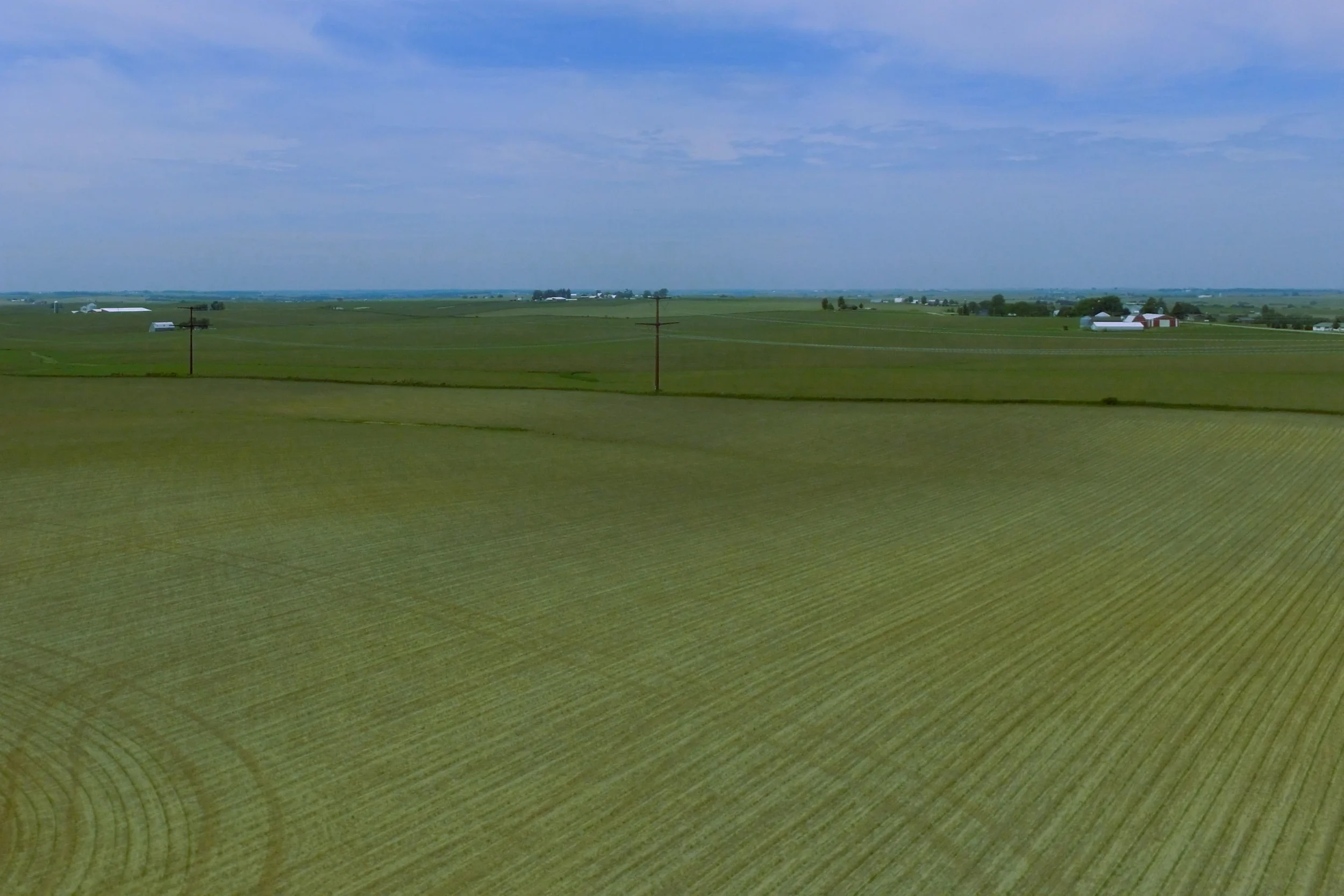
If they build it, rising costs will come.
Data Center Accountability for the citizens of Dubuque County

The Impact of Data Centers
Let's begin by answering a question that some of you may have... what is a data center?
Data centers are physical facilities that house networked computers, servers, and storage infrastructure. They support the internet as well as the storing, processing, and distribution of digital data for everything from cloud computing and banking transactions to streaming media and hosting artificial intelligence (AI) models.
In recent years, the rise of artificial intelligence, also known as machine learning, has transformed the data center industry. In the past, data centers only generally needed CPUs (Central Processing Units) throughout a majority of their operation. This changed when machine learning began to take hold, with many companies needing places to house their growing AI infrastructure. These AI data centers are highly reliant on GPUs (Graphics Processing Units) to train and run complex models like ChatGPT. Because these AI models demand a lot of computing power to operate, the systems running them consume a significant amount of electricity. The typical data centers today house hundreds upon thousands of machines running these AI models all at once and with little to no pauses in activity. As a result, these data centers require a massive power budget and robust cooling infrastructure.
Now that you know what they are... what are the true impacts of these data centers?
Data centers are an environmental hazard. Even if you have never seen one in person, you have probably stumbled across mention of the negative effects data centers have on the natural world. Data centers plague vital environmental systems for those living within its vicinity; affecting water availability, air quality, noise, not to mention causing a rise in the cost of living while simultaneously lowering property value.
In the county of Dubuque, Iowa, there is talk of a data center being constructed near the city of Dubuque, specifically Southern Dubuque County, a rural area consisting of many neighborhoods and farms that are home to hundreds of residents. If this data center becomes a reality, the residents of Southern Dubuque County, and the surrounding towns, including Dubuque itself, will face the consequences of this facility’s establishment. The calm and peaceful rural land, which has stayed that way for generations, is now in the sights of those willing to pollute the land and greatly increase cost of living for everyone, all for the promise of monetary gain for themselves and their allied companies.
The goal of this open letter is to closely examine the effects that a data center will have on the people, the environment, and the properties surrounding them.
A quick note before continuing: references will be made to the website Data Center Map to report the current number of data centers present across the United States. If this topic is important to you, please visit this website... become familiar with how present data centers are across the nation.
Cost of Living
Electric bills, gas, groceries... those unexpected expenses that come up all too frequently. Everything costs money. It's a fact of life.
Few will likely find this surprising, but a local data center will absolutely impact your cost of living, and in many ways. It’s an obvious fact that even those unfamiliar with the practices of these establishments could likely surmise. Let's take a look at what, specifically, data centers will affect.

Water Consumption
Placeholder. Source: Placeholder
From drinking to bathing, cleaning to gardening, and watering crops, water is undeniably a necessary resource every single being on earth. Thus, access to water is equally important. Unfortunately, data centers can threaten the availability of water to a community through their excessive pumping of water in and out of their facilities to cool their hundreds to thousands of racks of servers and other devices. As far back as August of 2022, one Lawrence Berkeley National Laboratory researcher told NPR that “a mid-sized data center consumes around 300,000 gallons of water a day, or about as much as 1,000 U.S. households.” These numbers have certainly grown as noted in an article from six months ago by the Lincoln Institute of Land Policy which estimates larger data centers’ water consumption to be closer to 5 million gallons per day.
In the Southern Dubuque County area, most water comes from wells on the properties of homeowners. Last year, EPP Well Solutions estimated that most wells have a yield of 6 gallons per minute, with low-yield wells accruing about half that amount per minute. Though each property generally has its own dedicated well, the water sources which make their way to the wells are the same, thus in a way, a community shares the supply of water via that source.
Considering this, if a mid-sized data center takes 300,000 gallons per day, roughly 208 gallons per minute, it consumes water at the rate of nearly 35 wells at once. However, if the data center is larger and consumes approximately 5 million gallons per day, roughly 3,470 gallons per minute, this rate causes it to consume at the rate of almost 580 wells. And unlike a household, where water usage would be varied and spread throughout the day, this rate would be constant and unyielding as the facility perpetually pumps more and more water in and out to cool their machinery. This raises the likelihood that water may not always be available to the community because of the extreme rate of consumption.
The effects of this over consumption of water are being felt even now. A report regarding a Fayetteville, Georgia data center by Politico on May 9th, 2026 recounts a lawyer’s statement about an absurd request by county officials. He states, “’We get this notification from Fayette County water system saying you need to stop watering your lawns to help conserve water,’” This statement insinuates the speculation of water shortages. To be told to “stop watering your lawns” in order to “help conserve water” when data centers are draining anywhere between 208 gallons per minute and 3,470 gallons per minute per facility is staggering.
Worse still, water consumption is only slated to rise dramatically in the coming years.
According to Consumer Reports regarding the data centers in the Phoenix, Arizona area (roughly 146 according to Data Center Map), the data centers use 384 million gallons of water per year. However, by 2027, this number is projected to increase by nearly ten times, about 3.7 billion gallons of water per year. Again, this is one cluster of data centers in and around Phoenix, not even the whole country. This accounts for roughly 308.3 million per monthly, 10.2 million per day, and 7,137 gallons per minute. Plugging this into the 6 gallon per minute refill rate for most wells, this use accounts for the refilling of nearly 1,200 wells per minute.
Water Pollution
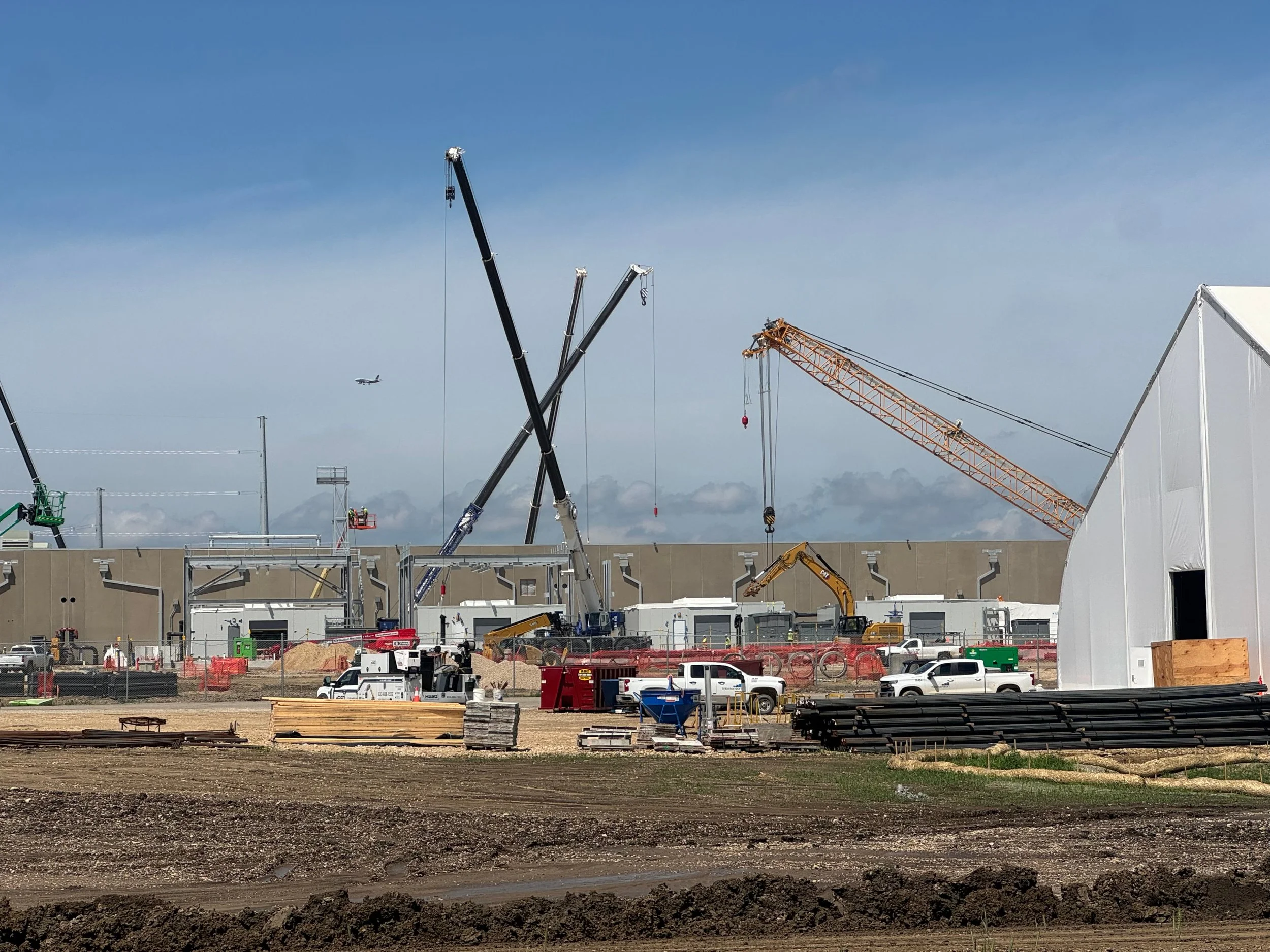
A data center in Cedar Rapids, Iowa being constructed.
When a data center needs to tap into a well or water source, there is a high likelihood that the facility will release contaminants such as debris, residual matter, dust, chemicals, and other substances into the water supply.
In July of 2025, the BBC reported on United States data centers and their effect on water. One individual they interviewed, Beverly Morris, claimed that after a Meta data center was constructed some 400 yards away from her home in Mansfield, Georgia, all of her water contained some form of unidentifiable residue. She believes the construction contaminated her private well, and thus doesn’t feel safe drinking it. Despite this, since her well is the only realistic option for her to get water, she still used it for cooking and hygiene. A sample of water from the area in which this Georgia data center was established was also shown to the House of Representatives in an attempt to bring attention to the matter.
Data centers can also directly contribute to pollution of water sources and soil. Sometimes, data centers dispose of water the same way everyone else does via the sewage system, and while this has a potential to push wastewater treatment plants past their capacity, this method of disposal generally isn’t harmful. However, according to NBC4 in February of 2026, a permit draft was issued by the EPA to allow the state’s 204 data centers (including future facilities) to dump their untreated wastewater into any of the state’s rivers. This water would certainly contain contaminants, such as heavy metals and various chemicals, and the increased temperature of the water itself would disrupt ecosystems in these rivers.
Connecting this to the Dubuque data center, what’s most alarming, should this type of permission be given, is that the body of water this facility would most likely use for disposal would be the Mississippi River. This river is important not only to the city of Dubuque, but to many cities and towns downstream along which the river flows.
Electricity and Energy Consumption
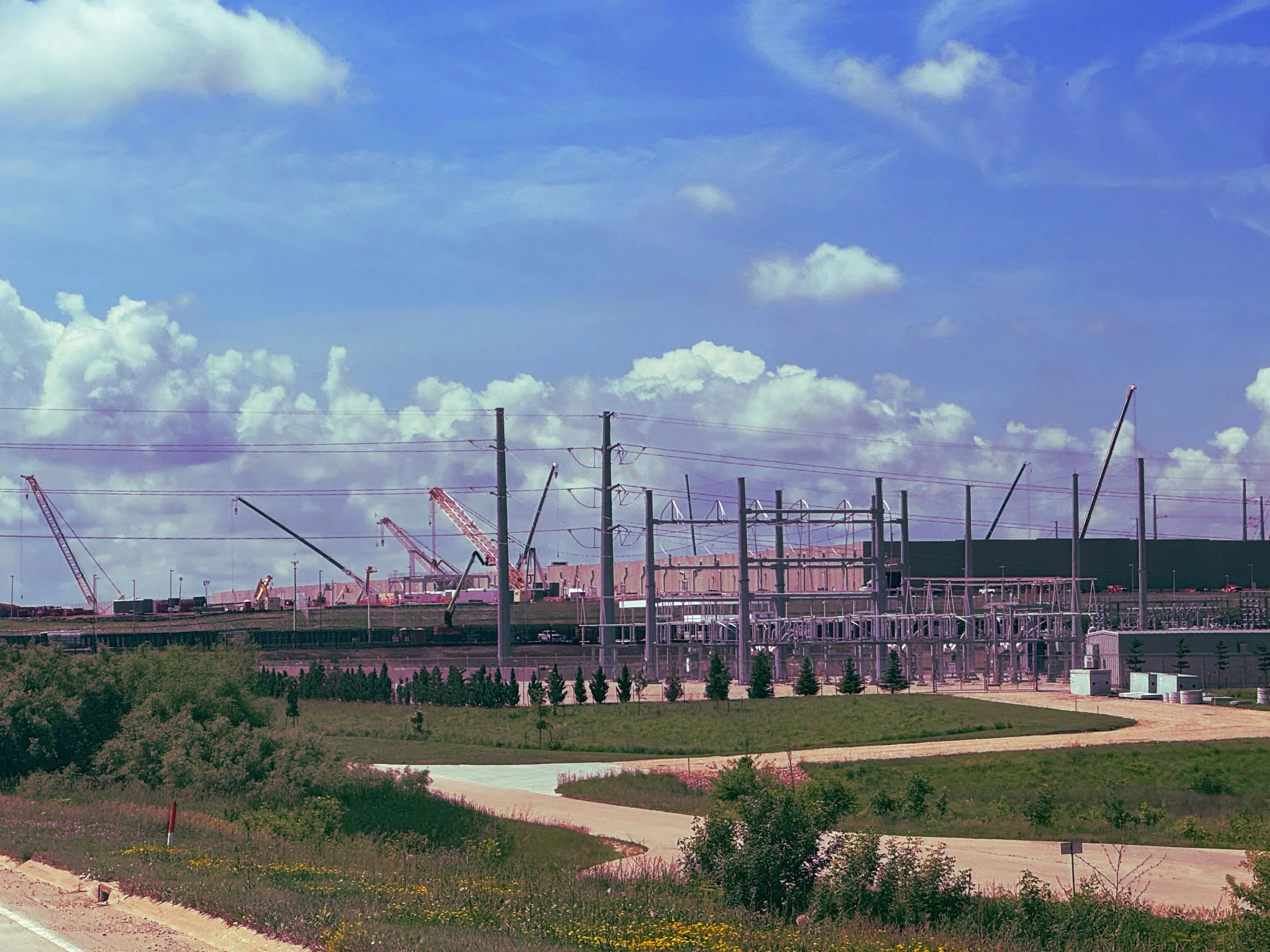
A data center in Cedar Rapids, Iowa.
Another large impact of the data center is its energy consumption. The International Energy Agency reports that in 2025, power demand by the United States increased, with over 50% of that increase coming from the ~4,000 data centers in the country at the time. Given how the demand for water is projected to increase nearly ten fold next year, it’s safe to assume the same applies to energy.
According to a manuscript written and published in May of 2026 by Jeremiah X. Johnson et al., this increase in data center power usage came sometime between 2018 and 2023, with these facilities going from 1.9% of the nation’s power consumption to 4.4%, from 76 to 176 terawatt hours. They continue, saying, “projections now indicate that, depending on future demand and operational practices, U.S. data center electricity use could reach between 325 and 580 TWh annually by 2028, equivalent to 6.7% to 12.0% of total forecasted U.S. electricity consumption.”
Putting this all into perspective, a report found on the Constellation website explains that most homes use roughly 10,791 kilowatt hours of electricity per year. Taking into account the closer-to-current rate of 176 terawatt hours being used by data centers, all of the data centers’ power use equates to the yearly power consumption of 16.3 million households. If we take the projected worst-case by 2028 of 580 terawatt hours, that instead checks out to 53.7 million households, over three times the original projected amount.
CBS News interviewed people living in Atlanta, Georgia and asked how they were affected by data centers. Patty Durand, an activist for clean and affordable energy in Atlanta, states, “’The average bill for an average customer used to be about $150 a month… The average bill now is $225.’” Carolyn Kayne, a resident, reported her power bills were so high that she sacrificed heat and water to keep costs down, making it harder to comfortably live in her own home. EESI reports that average homes previously paid roughly 13 cents per kilowatt hour in 2019, with this number rising to 19 cents by the end of 2025, a 27% increase. Areas with greater volumes of data centers would raise price per kilowatt hour by roughly 267%, approximately 48 cents.
Air Pollution
Placeholder. Source: Placeholder
One of the alternatives to the abundant use of electricity to power data centers is fossil fuels. Much like the excessive power use problem, fossil fuels and natural gases only seem to trade off problems, with the former being a costly siphon for energy and the latter being a major pollutant and health risk. In a sense, this makes the use of these fuels more dangerous not just for the people living nearby, but also animals, plants, and the environment itself.
Any industry or facility with high chance to emit dangerous levels of pollutants, whether it be particulates or gases, should be thoroughly investigated and approved by organizations like the EPA. Although this does happen with data centers, the Environmental Data and Governance Initiative reports that many data centers who have been approved by the EPA deal with “particulate matter, nitrogen dioxide, and diesel particulate matter levels above the national median.” This puts the concept of evaluation of data centers by environment-conscientious organizations into question and further muddies the water of the supposed safety measures these facilities would enact to keep the air and environment clean. In a community like that of Southern Dubuque County, where all of the surrounding structures would be residential homes, farms, and natural land, such conditions would be detrimental.
Despite not being as unilaterally costly as their use of water and electricity, fossil fuels can also directly lead to greater expenses by the community. Caltech estimates that these emissions cause between $190 million to $260 million a year in medical costs for the public. Additionally, they claim the airborne pollutants can travel extreme distances, saying, “pollution from backup generators at data centers in Northern Virginia drifts into Maryland, West Virginia, Pennsylvania, New York, New Jersey, Delaware, and the District of Columbia.” To visualize how much of these pollutants are produced for general operation, Caltech points out that the training process for OpenAI’s GPT-4 AI model put out enough fossil fuel emissions to equal roughly 10,000 round-trips by car from Los Angeles to New York City.
Noise Pollution
Placeholder. Source: Placeholder
Data centers are notorious for their noise pollution. While not directly connected to air pollution itself, noise pollution is a result of all of the machinery running 24/7 at these facilities. This includes cooling tanks, computer systems, generators, turbines, and other technology these establishments allow to operate passively and endlessly. According to EESI, data centers can potentially produce sound levels of up to 96 decibels, which is 11 decibels higher than what is generally deemed harmful for human ears. These conditions can cause stress, sleep deprivation, and other behavioral effects in some individuals.
Property Value and Property Taxes
Placeholder. Source: Placeholder
Data centers impact property value in various ways. In some cases, they can raise it, but for most, especially in rural areas, this couldn’t be further from the case. In a previously mentioned EESI report, it was noted that noise pollution was capable of decreasing property value, likely due to the disturbance residents would have to endure day in and day out. Likewise, energy, water, proximity to the data center, and other parameters can impact the value of a property, all determined by cost, availability, or other variables which can’t be controlled.
Sometimes, the physical value of the home or property itself may not decrease from data center presence, in fact, it may even rise. However, regardless of which happens, both are technically bad outcomes, with a rise in the price of a home in this case frankly being the worst case. Living near a data center that is undesirable at best, and, if someone is trying to sell their home, all of the negative impacts listed above will undoubtedly become a deal-breaker.
The Deceptive Benefits of Living Near a Data Center
Despite everything said to this point, people will still argue that data centers can sometimes bring benefits with them to the communities in which they are established. However, most of the reasons journalists and researchers provide for the positive side of the argument are things that do not apply to Dubuque or Southern Dubuque County.
According to a survey report from Modine, data centers can offer benefits in the form of “job creation, sustainability commitments, and economic growth,” and if the owners closely work with the community, they can contribute to community initiatives and services.
At face value, all of these potential benefits sound like positive impacts that would be welcome in any community. Though, there are many things to consider before carrying on thinking this is accurate and worthy compensation.
Job Openings & Opportunities
Data centers do bring in jobs for both construction of the facility and for maintenance when the center is operational. However, both suffer from their own unique issues that ultimately make them not as sensational as they seem.
For construction, the jobs of course only last as long as it takes to build the structure and connect vital resource lines. According to Broadstaff, this can be anywhere between 1 to 2 years total, and may be the longest period of the process of creating a data center start to finish. Regardless of the claim of duration, these jobs only last as long as the facility needs to be built. Once it’s finished, barring expansions, restructures, or repairs, that marks the end of the job. This makes this part of the job opportunity offer seem almost disingenuous.
When it comes to maintenance, the issue here isn’t job duration, rather the workforce itself. In short, the volume of staff employed by a data center is generally low. Returning to the reports by Broadstaff, the number of employees needed by a data center is typically determined by the megawatts used by the facility. For 1-5 megawatts, at most 15 employees are recommended. On the higher end, 20 or more megawatts would warrant 35 or more employees. Certainly, these are static jobs that would likely stick around as long as the facility does, but for an industrial building that takes up hundreds of acres of land and using so many various resources, this is staggeringly low. Not to mention, the actual tasks for these workers would be no more involved than ensuring nothing stops working and maintaining the facility. Thus, the core issue is that these jobs don’t offer much for their workers, and they don’t offer many working positions, definitely not enough to justify the data center’s existence.
Economic Growth
It is not false that there are profits to be made for the economy with data centers, though defining that as a benefit for the layman is very shortsighted because of one simple fact: the benefactors of this economic growth will be the companies and owners associated with the data center, not the citizens or communities. There is a chance that the landowners could benefit as well, should their land not be outright bought by the organization, however this does not apply to the Southern Dubuque County location and, regardless of if it did, it doesn’t benefit the public in any way. It’s also vital to reiterate the damage data centers do to the environment and property values. This alone nullifies these economic benefits for most, regardless of if they were to benefit from them or not.
The Bottom Line
As data centers continue to invade and infest our country, it is more important than ever for people to understand the negative effect they have. The people of Dubuque and the surrounding communities, including the city of Dubuque are now in harm’s way. Few would ever wish to be in such a situation, but the truth is, that reality could be fast approaching. It is not too late, there is still time to stop it, to put an end to the plans for this data center and free Dubuque from an uncertain future. To do this, we need the support of others. Only through the actions of many can we shed light on this situation and bring everyone together to seek out the best outcome.